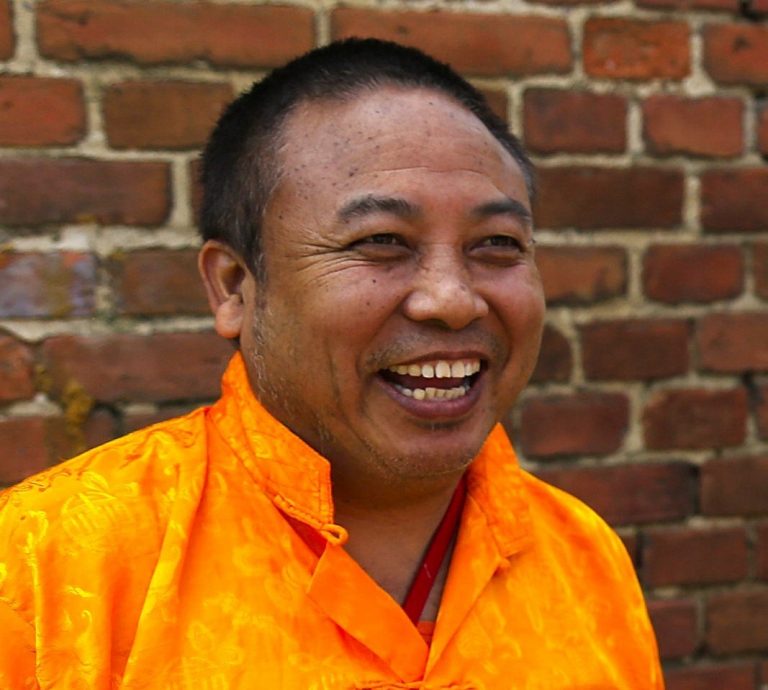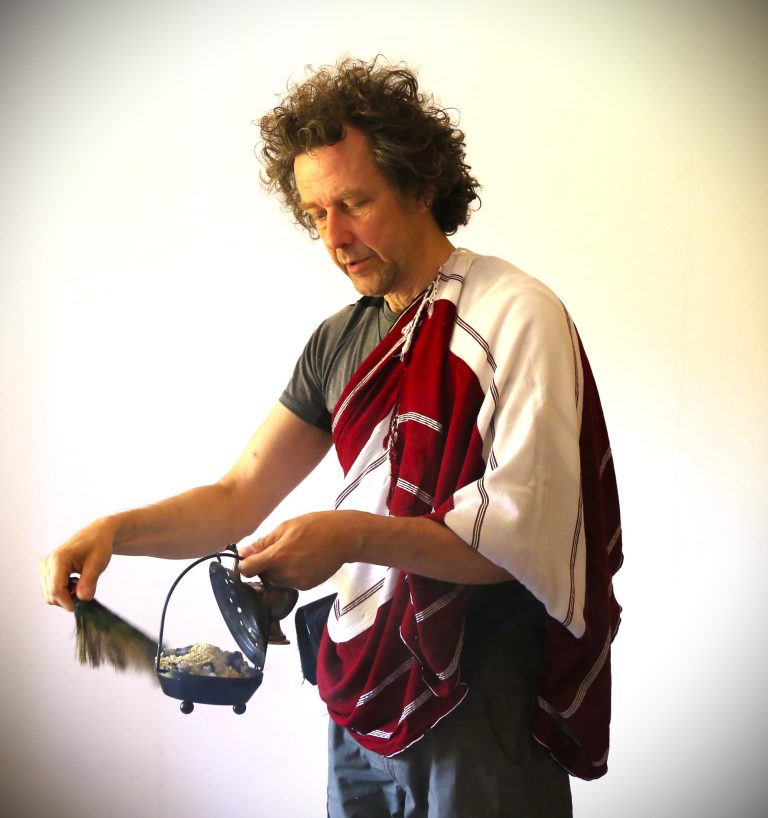
During the consecration of Pema Choling, Rinpoche performs a Naga offering for the powerful water spirits — with an astonishing result!
It’s noon by the time we can begin the consecration ceremony of Pema Choling.
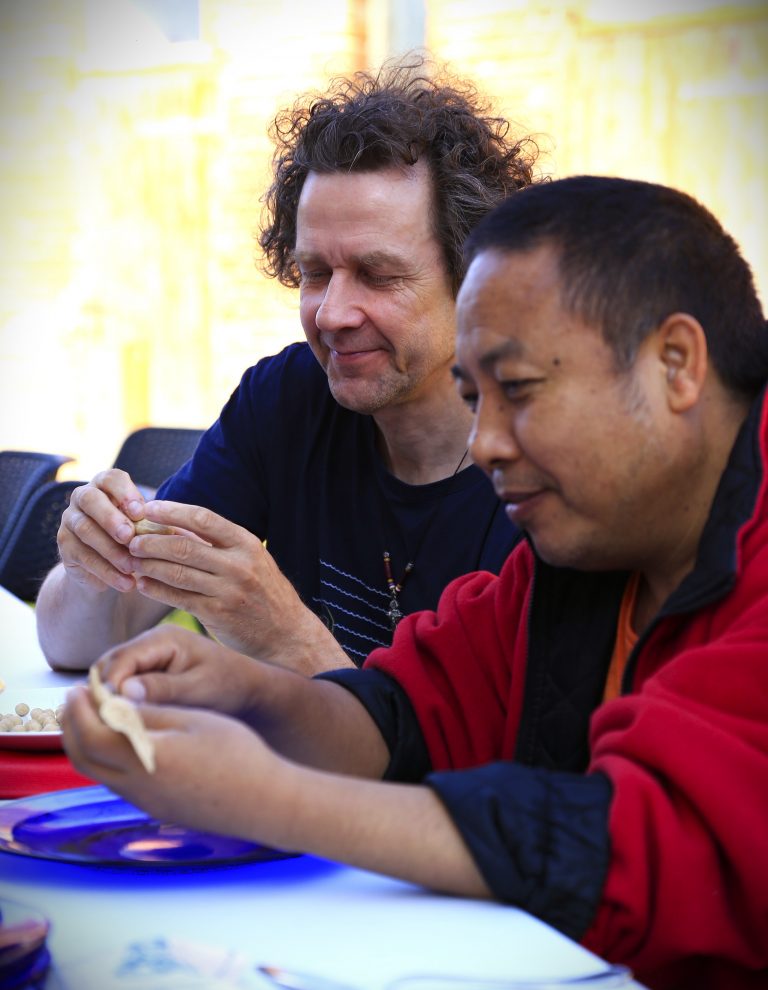
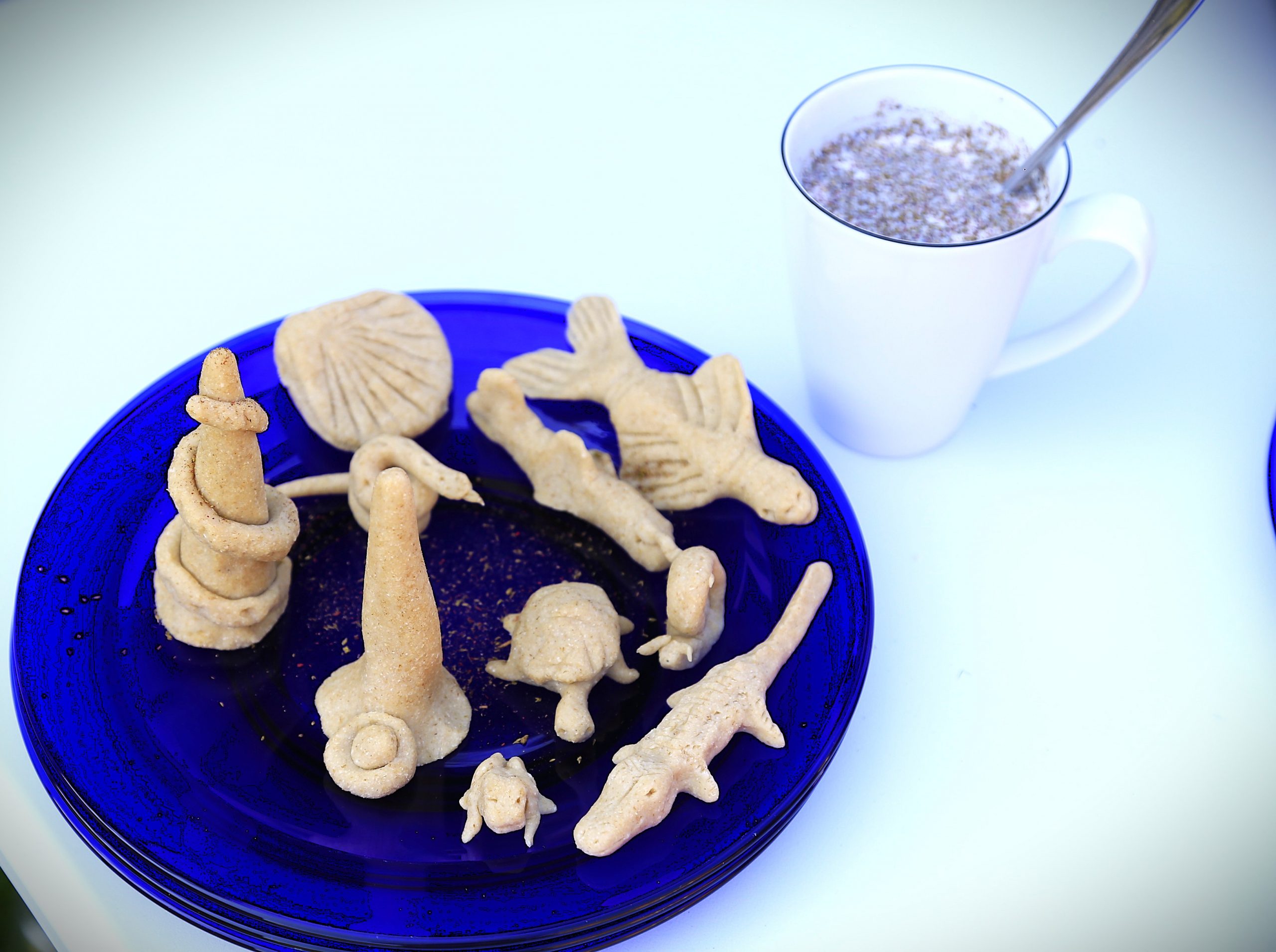
Because Rinpoche wanted to consecrate Pema Choling with a Naga offering, tormas — traditional offering cakes — first had to be kneaded, a painstaking task.
Rinpoche and Suriyel spent a good hour shaping little water animals and small balls out of oat dough. (→ Link zu “Offering”)
Now the plate of oat-dough animals and balls sits on the improvised altar in the pavilion by the pond. Beside it stands a cup of goat’s milk, into which Rinpoche has stirred a special Nepalese herbal mixture.
While Rinpoche and Suriyel are crafting the tormas, the “day guests” arrive. My Zen Dharma brother comes from Berlin, bringing his young daughter. A Dharma sister from Bavaria has planned her holiday so she can stop by Pema Choling on her way to the Baltic coast. Finally, my brother pulls up with his family.
My brother is the only one who already knows Pema Choling.
Everyone else is here for the first time — and delighted!
Which pleases me greatly.
But above all, I’m relieved that the rain of the past few days has cleared and — right on time for Rinpoche’s visit — the sun is shining.
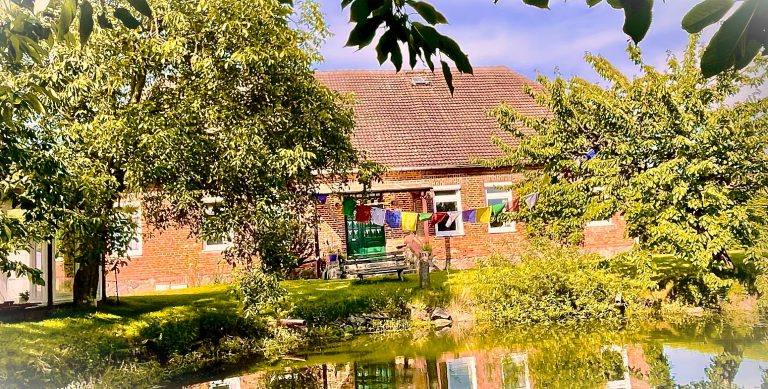
Because the weather is good, we can host the guests on the meadow beside the pond. If it had rained, we’d have had to make do with the unrenovated black kitchen in the main house.
And the fact that not all the guests fit into the small pavilion, where Rinpoche will perform the Naga offering, isn’t a problem either, thanks to the sunshine. We open the double doors, and whoever doesn’t find space inside sits on the grass outside.
In fact, everything has fallen into place beautifully!
The rain of the past few days has noticeably raised the water level of the pond.
Which is a great stroke of luck!
Because of the dry spring, the water depth had previously been no more than a metre. Suriyel had been so worried the pond might tip over — the water turning stagnant — that two weeks ago he installed a water pump in the middle of the pond.
Even though the water level is higher now, Suriyel leaves the pump plugged in. Anchored in the middle of the pond, a small fountain quietly bubbles away.
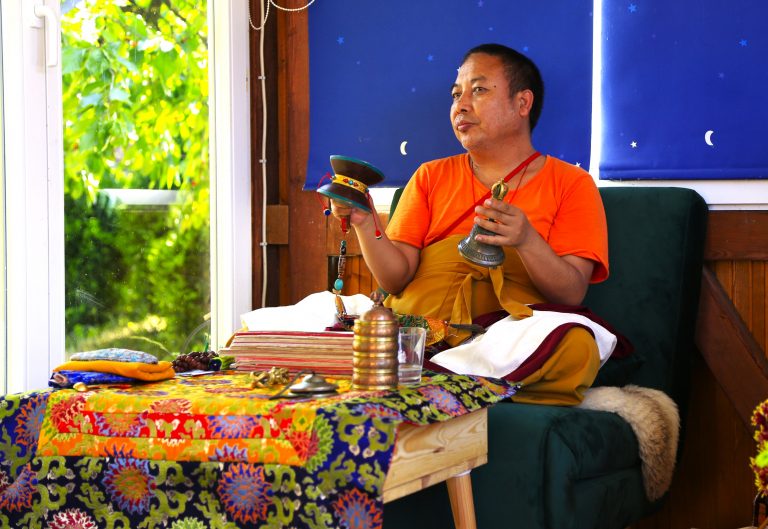
From his seat in the pavilion, Rinpoche has a perfect view of the pond and the fountain. He is enthroned beside the altar on my green velvet armchair, waiting patiently until all the guests have found their places.
On my coffee table, Rinpoche has arranged everything he needs for the ceremony: dorje and bell, his small hand drum, a bowl of incense powder, a bumpa filled with saffron water, a multi-tiered metal mandala, and a stack of long paper strips printed with the text of the ceremony.
The participants only have the texts as a PDF on their phones. Better than nothing, but not ideal for reciting along with Rinpoche.
Still, we do our best to keep pace with Rinpoche as he works his way, page by page, through the text.
When we finish the opening prayers, Rinpoche unexpectedly calls a halt.
“Is this water pump necessary?” he asks Suriyel, pointing outside at the fountain quietly bubbling away.
“Not really,” Suriyel replies.
“Switch it out,” Rinpoche instructs.
Suriyel gets up and goes outside. The pump is connected to a power socket on the outer wall of the pavilion. The moment Suriyel pulls the plug, a deep stillness settles over the pond.
“Much better!” Rinpoche declares, satisfied, before beginning the Naga offering.
First, the guests are invited: the principal water spirits, the Dharma-protector water spirits, and finally the local nature water spirits.
Once the water-spirit guests have gathered, Rinpoche consecrates the tormas, pours the little oat-dough balls into the goat’s milk, and beckons two Dharma brothers over from the group.
The two are given the task of placing the offering cakes at the edge of the pond, while the rest of us — sitting in the pavilion — recite a mantra, again and again.
By now, the ceremony has grown too boring for the three children among the guests. Accompanied by their parents, they go looking for frogs along the edge of the pond.
The two Dharma brothers return to the pavilion, empty plate and empty cup in hand.
They’ve laid the tormas and the oat-dough balls soaked in goat’s milk in the grass behind the pavilion, right at the water’s edge.
Rinpoche reaches for the drum to continue the ritual. The water-spirit guests must be bid farewell.
Suddenly, we’re jolted out of our concentration. There’s commotion at the edge of the pond. From my seat, all I see are the children, shouting excitedly and pointing at the water.
“A snake!” someone sitting with a view of the pond calls out. “There’s a huge water snake swimming out there!”
Everyone jumps up to catch a glimpse of the snake, blocking each other’s view in the process.
“Now it’s disappeared into the reeds by the bank,” someone from the sangha explains.
A shame. I was too slow.
Everyone is excited. Not just the children. The adults too.
“It came from over there!” calls out one of the two men who had laid out the Naga offering. “It came straight from the tormas and then swam right across the pond!”
The only one who stays calm and unimpressed is Rinpoche. He sits relaxed in the green velvet armchair, clearly not the least bit surprised by our visitor.
Looked at soberly: why would he be?
After all, we had explicitly invited the Nagas — the water spirits.
And Nagas — as every child in Nepal and Tibet knows — are magical water snakes.
If no water snake showed up when Rinpoche performs a ritual for them, he’d be a bad lama.
That’s presumably how Rinpoche sees it.
He’s a professional. Trained as a Buddhist shaman — because that’s what the Nyingma are — since the age of eight.
We, on the other hand: naive Westerners, dutifully practising our meditation. For years. Some of us for decades.
And at the same time, we’re never truly certain that what we practise so devotedly is more than clever psychology.
Which is why the water snake represents, for us, a rupture in our sense of reality.
After the ceremony, the guests and Rinpoche gather around the long table by the pond. There’s coffee and cake.
And plenty to discuss.